
People rarely wake up one day and decide to whiten their teeth out of nowhere. It usually builds up slowly.
Maybe it is something you notice in photos first. Your teeth look a little darker than you expected. Not very obvious, but enough to make you think about it. Or someone mentions it casually, and it stays in your mind longer than it should.
After that, most people do what anyone would do. They look up options. That is where things get slightly confusing.
There are products like teeth whitening strips that seem simple and easy. Then there are professional treatments at a dental clinic, which sound more serious, and naturally more expensive. So the question becomes less about whitening and more about choosing the right method.
At OneDentall, this is something patients ask quite often. Not because they do not understand the options, but because the difference between them is not always clear in real life.
The Appeal of Whitening Strips
Teeth whitening strips are easy to start with. That is probably their biggest advantage.
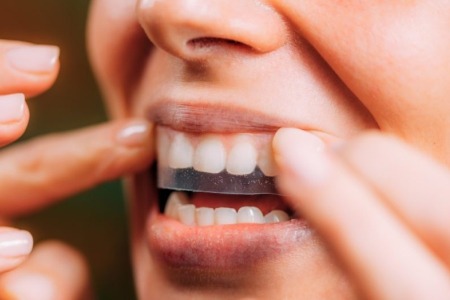
You do not need an appointment. You do not need guidance. You just open the pack, place the strips, and follow the instructions. For someone who is trying whitening for the first time, this feels comfortable. And to be fair, they do work in some cases.
If the stains are light and mostly on the surface, you might see a difference after a few uses. It is not dramatic, but it is noticeable if you are paying attention. But this is where expectations matter.
Most people expect a visible change quickly. That does not always happen with strips. The process is slow, and sometimes uneven. Teeth are not perfectly flat, so the strips do not always sit properly across every surface.
That is something people usually realize only after using them for a while.
What Professional Whitening Feels Like
Professional teeth whitening is a different experience altogether. Not just because it is done in a clinic, but because it starts with understanding your teeth first.
The dentist does not begin with the treatment right away. There is a check. What kind of staining is present. How deep it is. Whether the teeth are sensitive. These things matter more than most people expect.
The whitening itself uses stronger materials, but in a controlled way. Everything is applied carefully. The gums are protected. The coverage is more even.
Sometimes light or laser based methods are used to improve the effect, but even without that, the difference usually comes from precision. You are not just applying a product. You are following a process.
Where the Results Start to Differ
This is usually the point where people begin to see the gap between the two options.
With whitening strips, the improvement is often limited. It can help reduce mild discoloration, but it rarely changes the overall shade significantly.
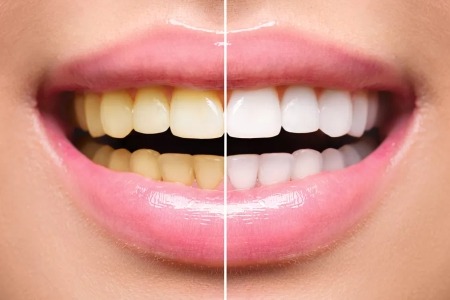
With professional teeth whitening, the change is easier to notice. It is not just lighter teeth, but a more consistent color across all visible areas.
That consistency is something people do not think about at first, but it makes a big difference in how natural the result looks. And then there is the question of how long it lasts.
Strips may need to be used again after some time. Professional treatments tend to hold their results longer, especially when basic care is maintained.
Sensitivity Is Not the Same for Everyone
One concern that comes up quite often is sensitivity. Some people already have sensitive teeth, and the idea of whitening makes them hesitant. Others only notice sensitivity after trying a product.
With whitening strips, there is no adjustment based on your condition. The product is the same for everyone.
In a clinical setting, things are handled differently. The process can be adjusted. Protective steps are taken. The goal is to reduce discomfort while still achieving results. That does not mean there is zero sensitivity, but it is managed better.
Cost Feels Different Depending on the Outcome
At first glance, whitening strips seem like the easier choice simply because they cost less. Professional whitening is clearly more expensive. That part is obvious. But the comparison becomes less straightforward over time.
If strips need to be used repeatedly to maintain a small improvement, the cost adds up. And even then, the result may not reach the level you expected.
With professional treatment, the cost is higher at the start, but the outcome is usually more complete. Fewer repeat attempts, fewer uncertainties. So it depends on how you look at it.
Why Some Stains Do Not Respond Easily
Every stain is unique; many people only pick up on this fact after testing a variety of whitening out of curiosity. For example, some stains can be changed with minimal effort; they are sitting at the surface of the teeth and are typically due to exposure to certain foods, beverages, or routine activities (e.g., chewing on ice cubes). As a result, these types of stains are usually most responsive to teeth whitening strips or even to a more basic cleaning process.
On the other hand, there are deeper stains - some of which may have been caused by long-term habits, medications, or natural shifts in the composition of your teeth. Deep-set stains will have some of the stain/color under the surface of your teeth; they can't only be removed from the surface.
When it comes to at-home products for these deeper stains, you may feel "limited" after trying a variety of products. You will likely only see minor changes in your tooth color if you have used many of the same product repeatedly.
When it comes to whitening teeth through a dental office, the use of stronger materials and controlled usage tends to be more effective on deeper stains; therefore, even though there is no guarantee that every time you whiten your teeth (using the products available from a dentist), your teeth will be the white color you expect, it should be hoped that you will create enough of a change in your tooth color to notice the improvement.
The Role of Consistency in Whitening Results
A common miss-conception is that consistency isn’t important; the method doesn’t matter as much as following the methods regularly. Teeth whitening strips require consistent use; missing an application or stopping in the middle of the treatment will decrease the chances of seeing results.
Even one or two days without following through with the treatment may slow down visible results. Finally, professional whitening treatments usually provide complete whitening in a shorter timeframe than at-home treatments, but ongoing maintenance will help prevent the return of stains.
Daily habits such as brushing, using mouthwash after meals, and eating foods that cause staining all add to the total amount of time you maintain your whiteness, regardless of the method you used to initially have your teeth whitened. Whitening is not an isolated event; it requires continued attention in order to achieve maximum benefit from an initial treatment, even if it is done by a professional.
When People Realize They Need More Than Strips
There is a point where people stop experimenting and look for a clearer solution.
Usually, it happens after trying a few things that do not give the expected result. Not failure exactly, just not enough improvement. That is when they come in for professional whitening.
At OneDentall, this is quite common. Patients often say they tried something before, but it did not make a big difference. And that is fine. It helps set expectations better.
Maintenance Matters More Than the Method
Whitening is not permanent. That is something many people learn after the treatment.
What you eat, how you clean your teeth, even daily habits like coffee or tea all play a role in how long the result stays.
So regardless of whether you choose strips or professional whitening, maintenance becomes important. The difference is just how strong your starting point is.
What People Often Expect vs What Actually Happens
The gap between an individual's expectations of teeth whitening and the actual result after the procedure has not been documented well enough nowadays to warrant mention.
People typically have a lot of their expectations based on photos that depict an ideal scenario where their teeth are completely white, all of them uniformly white; they come away with a false sense of what the product will do for them. The misunderstanding is that teeth will respond identically to teeth-whitening products, regardless of the dentition situation.
Some people will benefit from using the products immediately and some people may never see a noticeable difference or an improvement from their use, depending on the original stain, how long the teeth were stained, and their natural color.
When many people use whitening strips, they expect to see a marked difference but often will not experience one, their results will not be `false'; they will simply report that they obtained results that are not as noticeable as they initially thought they would be.
In a professional setting, the customer has typically had that expectation conversation with their doctor; there is usually an explanation of potential outcomes, and individuals can evaluate their expectations versus their predicted results and therefore, will typically feel that their results are going to be more predictable than if they had just submitted a `whitening strip' request.
Lastly, many people do not realize that lighting plays a big role in how the teeth look; they will look different under natural lighting than in fluorescent and incandescent light.
In A Nutshell
Teeth whitening strips are simple. Professional whitening is more controlled. One is easier to start. The other is easier to rely on.
There is no single answer that fits everyone. But there is usually a point where the difference becomes clear based on what you expect.
And once that is clear, the decision becomes much easier. Vist OneDentall to get a comprehensive report about your dental health along with oral hygiene.
FAQs
1. Do teeth whitening strips really work?
They can help with mild surface stains, especially if used consistently. However, the results are usually gradual and may not be very noticeable for deeper discoloration.
2. Is professional teeth whitening worth it?
For most people looking for visible and even results, it is worth considering. The process is controlled and tends to give a more predictable outcome.
3. Can whitening cause sensitivity?
Yes, some level of sensitivity can happen, especially with over the counter products. In a clinical setting, it is usually managed better with protective steps.
4. How long does professional whitening last?
It depends on daily habits, but results generally last longer than at home methods. Proper care can help maintain the effect for a longer period.
5. Which option is better for long term results?
Professional whitening is usually more effective for long term results. It provides a stronger starting point and better overall consistency.