.png)
Often, dental issues don't just develop out of the blue. A cavity may be tiny, yet it may have gradually led to a toothache, a missing tooth could impact chewing, and gum disease may have been silently progressing for years without ever reaching your attention. For many people, they learn to live with several oral health problems without fully understanding their connections to each other.
This is why a structured full mouth treatment plan recommended by the dentist is far better than fixing one problem at a time, as a well-devised plan will enable the dentist to understand your entire oral situation and determine the correct sequence of treatments necessary to restore long-term health.
At OneDentall, full mouth treatment planning addresses overall health, function and comfort within your mouth. It is individually-tailored as no two mouths, and no two people, have identical dental circumstances, habits or expectations. Some patients will require restorative procedures due to damaged teeth, whilst others will present with gum disease, missing teeth, problems with their bite, or worn enamel caused by excessive tooth grinding.
A thorough and well-considered treatment plan ensures that one procedure complements the next and does not cause new dental problems in the future.
What Is Full Mouth Treatment Planning?
Full mouth treatment planning is essentially a dental approach that applies when several treatments are needed across different areas of your mouth. It means the dentist will work out a full roadmap for your dental care, rather than fixing each tooth at a time without a direction.
It doesn't only concentrate on looks; full mouth treatment is also focused on restoring chewing capacity, the bite's alignment, speech, gum health and general dental function.
So if a person is missing several teeth and at the same time has gum disease and badly worn teeth, the issues may not be treatable individually, a gap can compromise the success of a tooth replacement without first establishing good oral health, for example, or cosmetic treatment may fail without prior correction of the bite.
This is why treatment planning is one of the most important parts of any dental treatment-it allows the dentist to find the source of your dental problem and create a plan that enables treatment stability.
Initial Consultation and Examination
This normally starts with an initial full dental consultation. This appointment isn't the same as a regular check-up; it is far more extensive. The dentist will want to gain an understanding of your entire oral health situation before suggesting specific treatments.
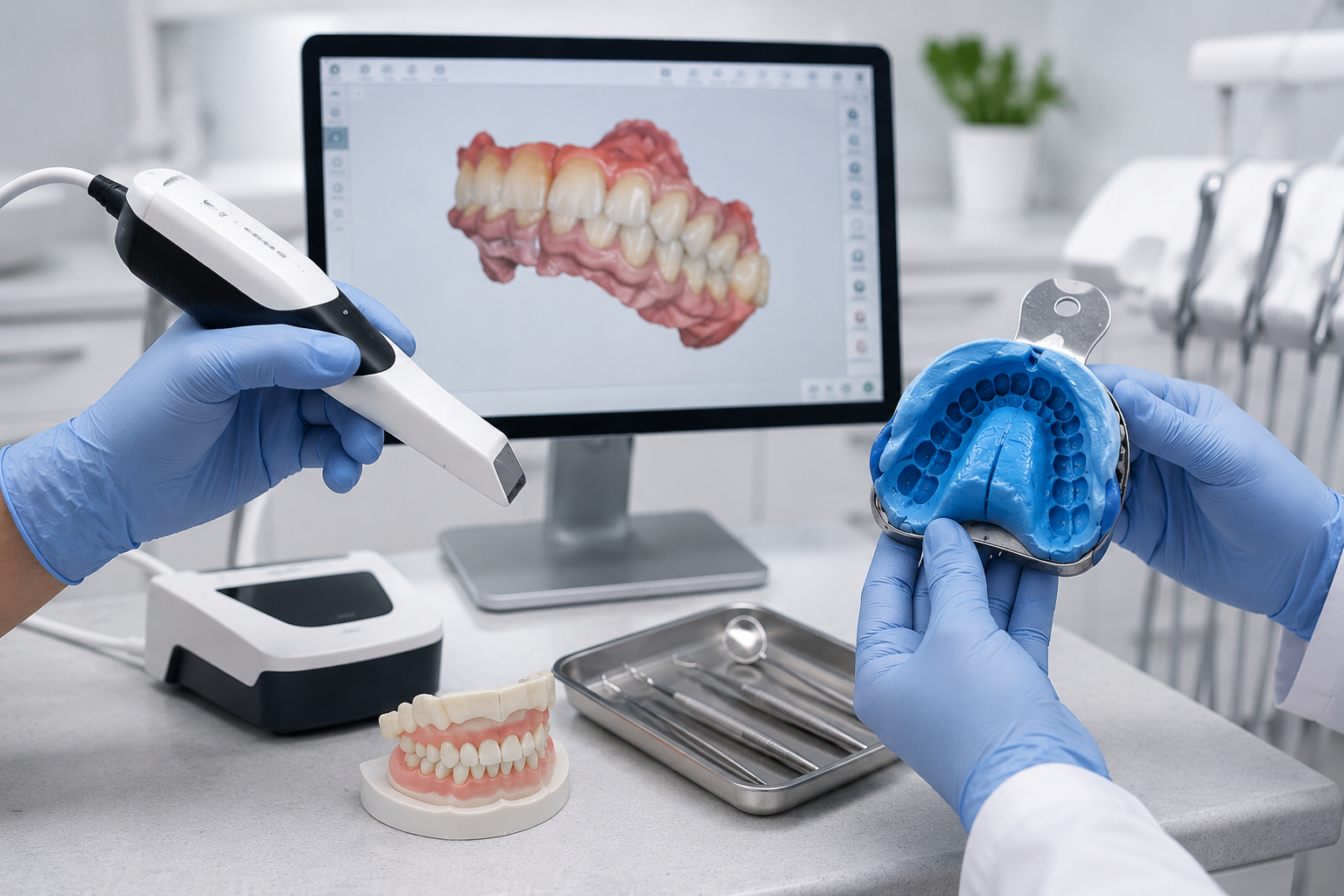
During a thorough dental examination at OneDentall, the dentist will consider the condition of the teeth, gums, the way you move your jaw and how the bite is working, along with any previous dental treatment work. X-rays and digital scans may also be used to assess hidden problems beneath the surface.
Often, a patient may have one concern when they visit the clinic (e.g., a painful tooth), the dentist may find that there is also evidence of bone loss, an infection in the gums or perhaps a cracked tooth and an unbalanced bite. By addressing these early, they can be dealt with to avoid further complexities during a longer treatment program.
The dentist will also discuss your medical history, your oral hygiene and lifestyle that may be impacting your dental health, such as smoking, teeth grinding or inconsistent tooth-brushing routines.
The Importance of Treatment Planning
Dental problems are linked. What may be an isolated problem at first may be impacting several areas of the mouth in the long run.
Take, for example, if one side of a person’s mouth cannot be used for chewing because of a particular problem, their teeth on the opposing side may start to wear down disproportionately, causing problems with bite balance and the jaw, and the teeth themselves could become loose due to lack of support from gums and bone structure.
Without full mouth treatment planning, treatments may simply offer short-term solutions; a crown placed on a tooth with a decaying gum line might not remain in place for long, or cosmetic treatments may start to wear away quickly if the bite needs adjusting first.
Treatment planning organises every treatment into the correct order, which reduces repeated dental problems and guarantees overall oral health and the best results over the long term.
Patients will also benefit greatly as they will gain a better understanding of what treatments they require before proceeding. This prevents them from receiving treatments unexpectedly, and they will know the order and importance of each individual stage.
Priority Dental Issues Treated First
It is vital that any pressing dental concerns requiring immediate attention are treated first; this will typically involve severe decay, dental infection or any issues causing serious pain or impact to normal daily activities, such as the inability to chew.
By addressing issues such as infection first, it is possible to establish better oral health before the main treatments, and infections pose risks of spreading, impacting on nearby teeth and gums, and surrounding teeth and surrounding gum tissue. It is this phase of treatment where patients generally see their pain and sensitivity subside to manageable levels.
Gum Restoration
The importance of having healthy gums cannot be stressed enough if you want your mouth to remain healthy for the long term. Healthy teeth require healthy surrounding bone and gums, and this foundation can become weak if gum disease starts to impact the support.
One of the earliest and most apparent symptoms of gum disease is bleeding when brushing; however, patients may not seek treatment as pain is not initially involved. Over the years, bleeding gums can worsen, leading to halitosis, gum recession, loosening teeth and potential bone loss.
Part of your full mouth treatment plan may involve professional dental cleaning, root scaling and planning or periodontal treatment, depending on the severity of the gum disease. Establishing healthy gums and their supportive structures is key to the success of implants, crowns or bridges.
Restoration or Replacement of Teeth
Following restoration of the gums, the damaged or lost teeth are replaced or restored. This step is about enhancing your chewing function, aesthetics and overall health. Damaged teeth might be repaired with fillings, a crown or even need a root canal before restoration.
The missing teeth will likely be replaced using a bridge, implant or denture, depending on your individual circumstances, gum condition and wishes. When teeth are missing, gaps can eventually impact the bite and overall chewing balance. Patients may become accustomed to chewing on one side without realising that this is placing additional strain on existing teeth, including crowns or implants that are already in place.
Treatment at OneDentall is aimed at balancing the mouth as a whole rather than fixing each tooth individually, promoting excellent chewing and biting capabilities as well as overall function and ease of speaking.
Enhancing Bite and Smile Aesthetics
Your dental condition may also involve a problem with your bite, which may occur as a result of uneven teeth or muscle strain in the jaw from prolonged grinding. Bite imbalance can lead to damage to your natural teeth as well as any dental restorations.
How you bite will be assessed in meticulous detail; your bite will be measured as you chew, speak, etc., and it may be corrected with a slight adjustment or more complex orthodontic treatment. It is important that the bite is corrected so that damage does not continue.
Cosmetic treatment, such as veneers or teeth whitening, will likely take place toward the end of the program; these procedures are about adding to what is already there rather than simply fixing an existing problem, thereby ensuring long-term functionality, but without addressing the underlying problem, these additions can be damaged quickly.
A Long-Term Investment in Your Oral Health
A full mouth treatment plan is typically not achieved in one short visit and can span weeks or sometimes months, depending on the severity of the dental issues. However, with a bit of patience, the outcome in the long term can be improved chewing, reduced pain, improved oral function, better self-esteem and overall greater confidence.
Most importantly, a treatment plan designed specifically for your dental health means you can look forward to many years of enjoyment with the full capabilities of your teeth.
Restore Your Smile With OneDentall
There are various dental concerns that people may need help with. However, if you have many different dental problems and would like an organised approach to treating them, you can create a custom full mouth treatment plan with OneDentall.
OneDentall will focus on helping you improve your oral health and comfort while providing you with modern treatment options. The clinic will provide personal attention to all of your dental needs from the initial diagnosis through the final restoration.
FAQs
1. What is full mouth treatment planning?
Full mouth treatment planning is a comprehensive dental approach where multiple oral health issues are evaluated and treated in a structured sequence for long-term results.
2. Who may need full mouth dental treatment?
Patients with missing teeth, gum disease, damaged teeth, bite problems, or multiple untreated dental issues may benefit from full mouth treatment planning.
3. How long does full mouth treatment take?
The duration depends on the patient’s oral condition and the number of procedures involved. Some treatments may take a few weeks, while complex cases may require several months.
4. Is full mouth treatment painful?
Modern dental procedures are performed using advanced techniques and anaesthesia to keep patients comfortable during treatment.
5. Can full mouth treatment improve chewing and speech?
Yes. Restoring damaged or missing teeth and correcting bite problems can improve chewing ability, speech clarity, and overall oral comfort.
_O1D2jGG.png)
_4PGBK7c.png)
_D4INuQY.png)
_2Tips8C.png)