
Advanced Root Canal Treatment in Belgaum by Expert Endodontist
Advanced Root Canal Treatment in Belgaum by Expert Endodontist
Relieve pain and save your natural tooth with advanced root canal treatment performed using modern techniques for safe and comfortable care.
What Is Root Canal Treatment
Most people don't really think about a root canal until they're dealing with a tooth that won't stop bothering them. It usually begins with something small like sensitivity to cold or a dull pain that comes and goes. Over time, it becomes stronger, and that is when you realise something is not right.
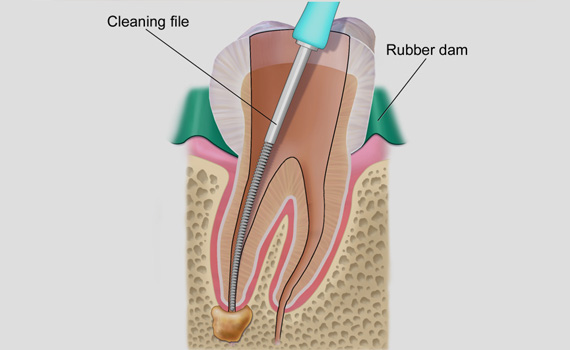
In many such cases, the issue is not just on the surface. It goes deeper inside the tooth, and that is where root canal treatment becomes necessary. The idea is simple. Clean the infection and save the tooth instead of removing it. At One Dentall , every case is carefully evaluated so the treatment is planned to remove infection while preserving your natural tooth.
When Do You Need a Root Canal
Sometimes the signs are clear, and sometimes they are easy to ignore.
You may need a root canal if you experience
- Continuous toothache that does not go away
- Sharp pain while chewing
- Sensitivity to hot or cold that lingers
- Swelling around the gums
- A darkened or discoloured tooth
- Pain after a tooth fracture or injury
In some cases, the problem is detected during a routine visit before it becomes painful. Early diagnosis helps simplify the treatment.
Our Root Canal Treatments
Root canal treatment varies depending on the condition of the tooth and the severity of infection.
Single Sitting RCT
This is when the root canal is finished in one visit. It’s usually done when the problem is clear, and there’s no major infection.
Benefits:
- Faster treatment completion
- Fewer dental visits
- Quick pain relief
Multi-visit RCT
Sometimes the treatment is spread over a few visits. This gives the tooth time to settle, especially if there’s pain or infection.
Benefits:
- Better infection control
- Reduced treatment pressure
- Improved healing time
Re-RCT (Retreatment Cases)
If a previous root canal hasn’t worked properly, it may need to be done again. The dentist reopens the tooth, cleans it, and treats it fresh.
Benefits:
- Saves natural tooth
- Eliminates hidden infection
- Restores treatment success
Rotary Endodontics
Here, small rotating tools are used instead of manual ones. It makes the cleaning inside the tooth more precise and usually quicker.
Benefits:
- More precise cleaning
- Faster procedure time
- Improved treatment comfort
Apicoectomy (Surgical RCT)
If the infection is still there even after a root canal, a small surgery may be needed. The tip of the root is treated directly to clear the problem.
Benefits:
- Removes persistent infection
- Preserves natural tooth
- Prevents further complications
Understanding Root Canal Treatment and Why It Matters
When you have a disease in your tooth's nerve, you need to be treated with a Root Canal. At the end of your root canal treatment, we will have cleaned out the infection, sealed your root cavities, and prepared the tooth for a Crown.
Many people are afraid that they will have pain during their Root Canal Treatment. The majority of the time, patients will tell you that the pain they had before the treatment was worse than the pain they had during the treatment itself.
With the advances in rotary instrumentation, treatment times are much shorter compared to hand instruments; there is improved accuracy of instrumentation during treatment, and the success rates for root canal treatment are higher. Infections usually begin small and can get much larger if not treated early enough, so it's important to have them treated early on.
Root Canal Treatment will relieve your pain, keep your natural tooth, restore the function of your tooth, and limit the spread of an infection. The longer you wait to get treated, the greater the risk of experiencing more severe pain, swelling, and tooth loss. After your treatment, you will experience some mild discomfort.
You may eat soft foods until your natural tooth has been covered with a Crown, usually after about 2 weeks. Practising good oral hygiene and seeking treatment for dental issues as early as possible will help you avoid needing a root canal altogether.
Why Patients Choose One Dentall for Root Canal Treatment
- Experienced dental professionals handling each case
- Use of modern techniques for precise treatment
- Focus on saving natural teeth whenever possible
- Comfortable and patient-friendly approach
- Clean and well-equipped clinical setup
- Complete care available under one roof
What to Expect: Your Step-by-Step Treatment Journey
Step 1: Consultation and Diagnosis
Detailed evaluation with examination and digital imaging if required
Step 2 Treatment Planning
Clear explanation of the condition and a suitable treatment approach
Step 3 Procedure
Cleaning of infection and sealing of the tooth using advanced methods
Step 4 Restoration and Follow Up
Placement of crown and guidance for long-term care
The First Step
If something feels off, even slightly, it is better to get it checked early. You do not have to wait for severe pain. A simple consultation can help identify the problem and guide you on the next steps.
At One Dentall, the process is straightforward. You come in, the tooth is evaluated, everything is explained, and treatment is done only when you are comfortable.
Book Your Visit at One Dental Today
Walk-ins welcome. Prior appointments ensure dedicated time for your visit.
Frequently Asked Questions
Ready to Relieve Your Tooth Pain
Do not let discomfort continue or worsen. Early treatment makes the process easier and more effective.
Book your consultation today and take the first step towards pain-free dental health.